My Recent Trip To Kansai District, Japan - Part 2


MY RECENT TRIP TO KANSAI DISTRICT, JAPAN – PART 2: FOOD, LIFESTYLES, CULTURAL TRAITS.

This is the sequel to my earlier sharing posted about a week ago. Again, I am trying to avoid verbiage but instead let my pictures do most of the talk and walk around with captions. However, to complement the entire overview regarding my experience on food, lifestyles and culture during my eight-day visit there, allow me to sum up a few key observations first:

·         *In a nutshell, the people were courteous, well-mannered, agile, orderly and tidy. They moved fast.

·         *Everywhere was the environment of hygiene and cleanliness. I hardly saw any speck of litter in the streets and public places. Even the public toilets were very clean.

·         *The people were generally smartly dressed. The common office attire for men included dark suit and tie. Even employees manning ticketing counters looked smart in suit or blazer.

·         *It’s not their culture to accept tips. In one instance, one of us left some tips in the tray after settling the bill in a restaurant; and after we had walked out to some distance away, the cashier came running to return the money. At a busy supermarket, another friend missed picking up 1 yen change from the tray after making payment; likewise a worker ran to us to return the coin.

·         *Easy vehicle traffic. We did not witness any traffic jam even in the large cities of Osaka, Kobe and Kyoto. Most Japanese used trains to commute. My group did not hire taxis since the train and subway networks were encompassing enough to cover where we wanted to go. For shorter travel time, we chose rapid trains which charged higher rates. We also took the normal trains, which had more route stops. when we did not need to rush from one place to the next. Yes, the trains were very punctual in accordance to specific timing. Cycling was also a common mode of commutation. I saw many smartly dressed Japanese cycling in the hearts of Osaka, Kobe and Kyoto.

·         *Reading seemed to be a common habit. I witnessed many commuters reading books in trains rather than whiling away time.

·         *Popular hang-out spots for men in the evening (I presume after work because they were in suit and tie) were the small local restaurants and bars. Many such outlets had karaoke facilities. The smallest outlets did not have stools – patrons stood around bar counters to drink and eat. Drinking culture” was prevalently seen.

·         *Ladies in kimono were not commonly seen unless in shrines, temples or some special events, or in entertainment outlets.

·         *Osaka appeared to be a “shopping city” hoarded with lots of ladies’ stuffs and branded goods. However, prices were not cheap compared to many other Asian countries. Unlike Malaysia, the malls there hardly had public benches for shoppers to rest.

·         *I noticed that Japanese women, especially younger ladies, liked to wear heavy makeup.

·        *Cost of food was also not cheap too compared to other Asian countries. A small set of noodle or rice meal ranged from 650 to 1,000 Yen on the average (1,000 Yen was equivalent to 40 Malaysian Ringgit).


 (Prime beef BBQ dinner in the first evening upon our arrival. Succulent and "juicy". No, it's not Kobe Beef (the most pricy beef which would cost more than RM500 equivalent per piece of steak). This meal cost us about RM100 per head.)

(Wide varities........available in any food street with rows of restaurants and stalls on both sides.)

(A small supermarket in a market street - well stocked with foodstuffs and nicely displayed.)

(Japanese puffer fish - a famous delicacy. If sliced the wrong way, the meat would be lethally poisonous. The vendors would slice the fish meat for customers.We were tempted to try but dared not venture to take the risk. Note the exorbitant prices.....as high as 16,000 Yen - equivalent to RM640 - in an ordinary market street.)

(To be eaten raw.......at the seafood market in Wakayama)

(Fresh and processed seafood in the Osaka wholesale market.)
(Varieties for taste buds in another food street........fresh chestnuts for frying on the spot, smoked fish, processed "bites" and tit-bits.)

(Kirin Beer, one of the popular beer brands in Japan. It also comes in the "alcohol free" version.......tasted like normal beer to me but without the "arousing" sensation.)

(Freshly brewed Japanese green tea, rich green in colour..........available in Orima-Onsen.)

(Shabu-shabu, steamboat dinner Japanese style........about 3,000 Yen per head. I would grade this meal 6 or 7 points from a scoreboard of 1-10. Suited quite well for the slightly cold weather when we savoured it.)

(We took this from a MOS Burger outlet. This was the best burger I had ever tasted. Cost equivalent to RM12.- RM13.)

(See how well and smartly dressed were these employees in red.)

(Students in smart uniforms, participating outdoor activities.)

(No longer a very common sight.......ladies in kimono and traditional footwear. These pictures were captured nearby a temple area. The young ones were petite, cute and graceful......the older ones were yet resplendent.)

(If I were a lady - which I'm not - I would have bought one set for my wardrobe.....not cheap.)
(Pretty decorative items for display in home and as souvenirs.......again, quite pricy.)

(A small but cute looking house.......plenty of such found at the peripheral areas of cities. Land space and accommodation properties are definitely very costly.)

(We took the rapid train to Osaka city upon arrival at Osaka Airport. Very clean and comfortable.)
(A normal train to the suburbs........also very clean.)


 (Commuters coming out from subway stations. Train is the most popular mode of commutation.)
(Moving about on bicycles.........also another common mode of commutation.)
(A bicycle parking area.)

(Clean streets, free of litter. Cleanliness is a prominent cultural trait in Japan.)


(The Japanese education system believes in a balance between academic, physical, social and cultural elements........both indoor and outdoor.)
(University students on the way to do social work.....cleaning the compound of the Osaka Castle area.)
(Firming up young female students.........physically and mentally.)
(Studying culture and doing homework in a temple compound on a Saturday.)

That's all folks!


My Trip to Kansai District, Japan


ABOUT MY RECENT TRIP TO KANSAI DISTRICT, JAPAN – PART 1
((Foreword: A group of 11 senior citizens, including myself, ventured out on a self-organised trip - i.e. without involvement of any travel agency – from November 5 to 12, 2012 to Kansai. Thanks to three seasoned travellers among us pals, namely Raymond Ho, Jack Lee and Lee Min Tet who volunteered to be the itinerary planners and joint “guides”, I have archived an encompassing account of the trip in the form of short notes and snapshots. In case you may want to consider Kansai as the next holiday destination, you may find my account useful.

What I witnessed and experienced could be categorised in three aspects: (1) sightseeing (2) food (3) lifestyles & cultural traits.

For now, I am sharing only on my sightseeing phenomena. The other two categories will be shared in the next sequential episode as Part 2. So, here comes Part 1: Sightseeing.))

I wish to lay out my account by way of short descriptive points plus photographs with captions on the places that my group visited. Please note that my sharing now is only reflective of places recorded in my camera; there were many places of interest in Kansai which we could not accommodate in our itinerary due to time constraint.

Preliminary Information:

·         *We flew by AirAsiaX. Most of us booked the flight to and fro Osaka (the main city in Kansai) almost one year ago at RM505 (offer rate).

·         *Stayed in Weekly Mansion Osaka at Otomae. Made reservation via the web. Rate: US$53 per night, inclusive of tax, on twin-sharing. This is an apartment hotel, with the necessary facilities, including pantry, kitchen utensils, stove and microwave oven. Free wifi access only at the hotel lobby. Next to the lobby is the laundry machine room - auto-charge service at reasonable rate.

·         *We commuted by train and lots of walking from day 1 upon arrival at Osaka Airport till our departure day.

·         Our places of visit were pre-selected by research via the web by Raymond, Jack and Min Tet. And all in all, I only spent the equivalent of around RM2,600 for air-fare, lodging, food, sightseeing, plus some local foodstuffs (for home) incurred in my eight days in Kansai. Really worth the money spent!


      DAY 1: OSAKA AT NIGHT:
Reflections..........in the midst of Osaka City. Snapshot was taken during a stroll after dinner.)


DAY 2: KYOTO GYOEN NATIONAL GARDEN & YASAKA PAGODA:


                           ( Greenery began to turn colourful in the first week of November)
                                               (Environment of peace and freshness)
                                                                     ( Nice view )

                                                            (Two picturesque scenes)

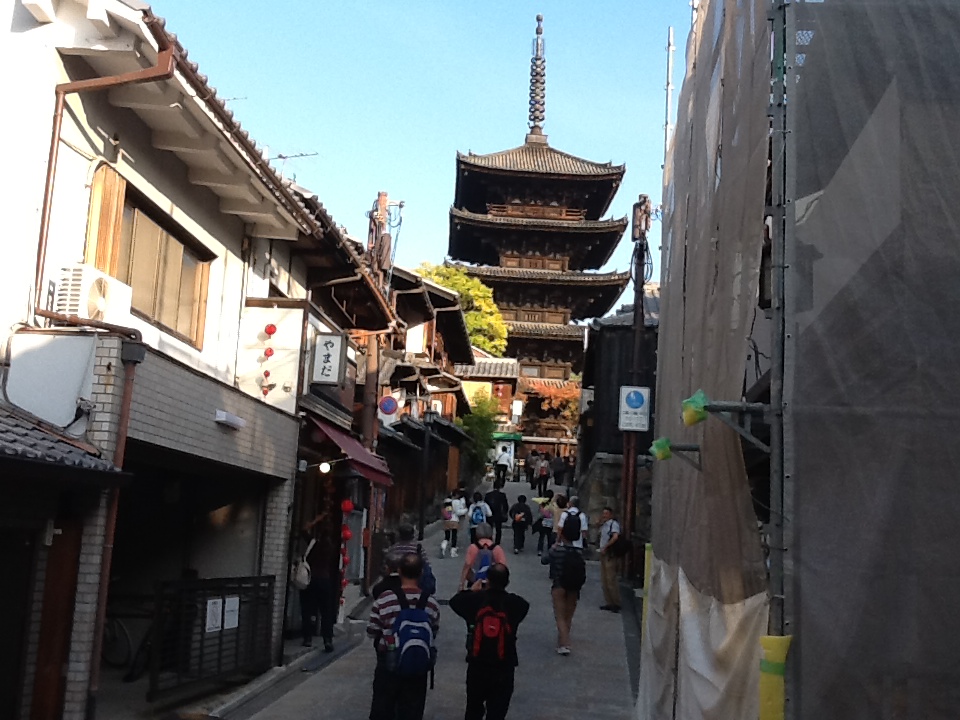
                                                  (The street up to Yasaka Pagoda)
(The Hollies would have changed their hit song from "He Ain't Heavy, He's My Brother" to "They Ain't Heavy, They're My Customers............pulling up on the sloppy street to the Yasaka Pagoda)

DAY 3: IKOMASANJYO (HIGHLAND THEME PARK), NARA & KOBE PORT

                                                         (Cute looking cable car)
 (Visitors could get a good view of the city below while going uphill in the cable car)
(The rollercoaster in the theme park. The park caters for fun. It is an ideal venue for family day outings, especially families with young children)

(Nara is a suburban township ideal for leisure visit by strolling around. No bustling vehicles, very     clean, lots of souvenirs and foodstuffs for selection)
(This shop makes fresh soft candy balls that stick and linger in taste buds............it entails quite a bit of might and physical activity in the preparation)

                    (Nara Deer Park.......friendly deers greet visitors. The park is very clean)
                                            (One of the serene lake views in the deer park)

                         (Kobe as the city of lights at night.........snapshot taken from Kobe Port)
(The musical fountain at the courtyard of Notre Dame building, hich is situated just beside Kobe Port. A rhapsody.......climax water display when the music became intense)
                                     (Indeed, buildings glitter at night as viewed from the port)

DAY 4: ORIMA-ONSEN & HAKUTSURU SAKE BREWING MUSEUM IN KOBE
                                         (Setting of a hill resort as one enters Orima-Onsen)
(
                                  (Colourful foliage surrounding the hill resort in November)
                    (Even this shop-house was spiked up by colourful foliage on it and around it)
                       (Public sulphur-saturated hot spring to sooth tired feet........free of charge)

                               (The brewery cum museum - producing a popular brand of sake)
                                          (Part of the traditional processes for brewing sake)
                                             Cheers!.......sampling some varieties of sake)
                               (The traditional and best way for drinking sake.......from a bowl)

DAY 5: WAKAYAMA MARINA PARK:
                                (Varieties of raw seafood sold at the seafood market in the park)
                                (Preparing to slice a Salmon fish for the meat to be eaten raw)
                                                 (Scenery........looking out to the sea)
(Wakayama has entertainment for children too........."let's shake hands to be friends")

DAY 6: OSAKA CASTLE PARK:
                                          (View of the fortress and castle from a distance)
                                                (Pleasing sight.......surrounding the castle)
 (This is the castle, built in the 17th century and rebuilt in 1931. It now serves as a museum)
                            (Views of the city from the observatory at the top level of the castle)
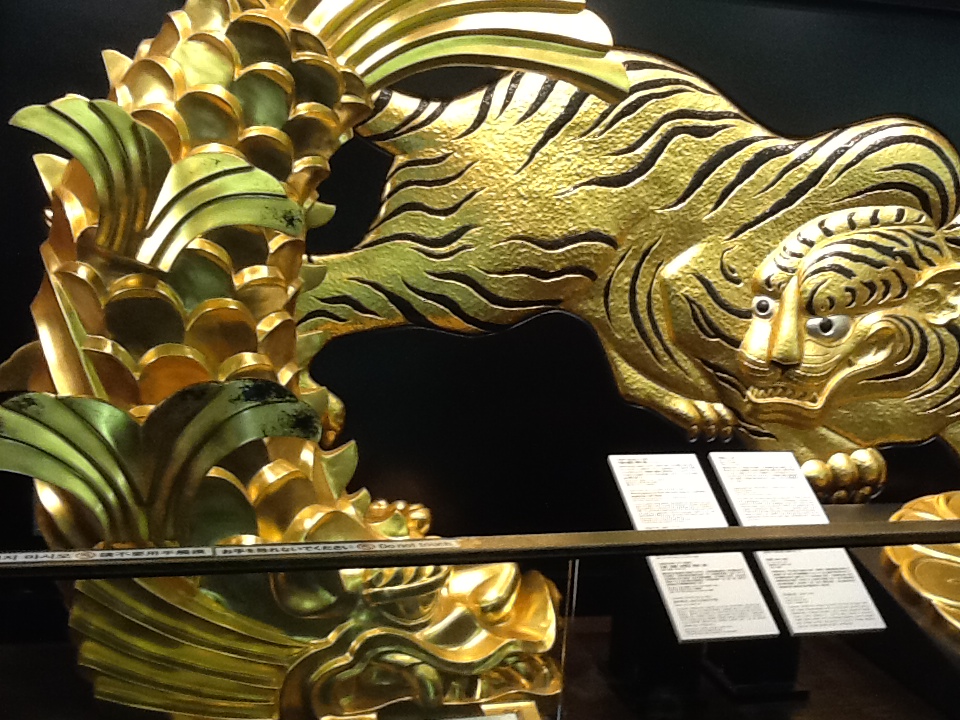
 (Replicas of the shachi, the legendary dolphin-shaped fish, and fusetora, the crouching tiger)

DAY 7: OSAKA AQUARIUM KANYUKAN:
                      (Some of the graceful marine species not seen back home in Malaysia)

Watch out for Part 2 of my sharing on Kansai - highlights on food, lifestyles and cultural traits, which shall be posted.............very soon.


 ct
:


Keep Watch On The Yuan & Asian Currencies.....


RMB TO WEAKEN?: (contributed by Chan Cheh Shin - Fund Manager)

Thoughts for October 2012............

We often hear analysts and economists telling people that there is nothing to worry about China's capital outflows as the world No. 2 economy has US$3.2 trillion in FX reserve. This, however, ignores the impact of a shrinking FX reserve on Chnese liquidity. Capital outflow is a drain to China domestic liquidity.

The People's Bank of China (PBoC) does have US$3.2 trillion of so-called "fire power" to prop up the currency in the unlikely event of massive capital outflow, but the success of it will come at the expense of domestic liquidity.

PBoC might use other tools (on top of the routine use of reverse repo) to ease liquidity, such as outright bond buying, or perhaps guiding a depreciation of the Chinese yuan (as Renminbi is commonly called) and hope that inflows will appear again.

And the latter option appears to be what the PBoC is actually using. As the US Fed announced QE-Infinity, at some point it may (or perhaps not) necessitate PBoC FX intervention again, essentially to print Chinese yuan in order to bring the price closer to the fixing.


Watch out!.......for other Asian currencies to possibly slide too.....

Question: Will an exchange of new party leader have a significant positive impact on China economy?

My opinion: No correlation at all. In fact, the political/position in-fighting within the party since March 2012 this year may only result in the following two outcomes:

* A mad rush to pump up the economy so that the new "leader" will look good. But it will be bad for the fundamental economy as the growth is again pumped up by stimulus.

* Party members will spend much more of their energy in jockeying for positions and thus put the economic growth plan to the back seat.

Happy Thinking!

Powered by Blogger.